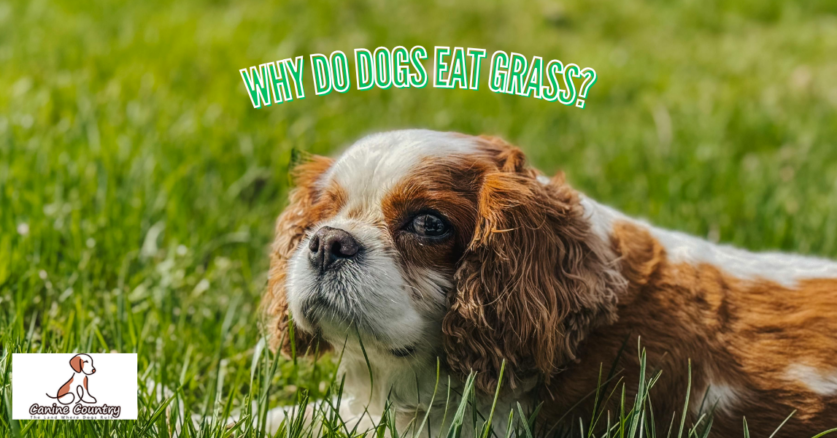
Why Do Dogs Eat Grass?
Posted May 11, 2026 in Health & Safety
Some dogs want to eat the only thing they can’t have, and a lot of the time, that is grass! When you see your pup munching on some grass, it may be alarming, but this behavior is actually quite common among canines. Dogs eat grass for a variety of reasons, so understanding why will help us owners better interpret our pets’ behaviors and decide if this habit needs a closer look or not.
Why Do Dogs Eat Grass
Boredom
When we humans get bored, we get to watch TV, go shopping, or read a book. Our pups sadly don’t have this privilege. Due to this, if they are outside for long amounts of time with nothing to stimulate them, grass is their nearest option to keep them entertained. Try to keep them more occupied during outside playtime, whether that is more games of fetch or finding interactive toys to keep their snouts off the ground.
Anxiety
Dogs can experience high amounts of stress and nervousness, and these feelings can translate into repetitive behaviors, like eating grass, to cope. It can act as a calming effect or a distraction for our pups. If you notice that your fluffy friend is exhibiting anxious behavior while eating grass, like pacing or whining, it may be best to explore ways to reduce their stress or consult a veterinarian.
Nutritional Deficiency
Dogs have a complicated diet. They need more than just meat; they need fiber as well! When they aren’t getting enough greens, many canines will seek the nearest source of fiber to satiate that. Grass can act as a natural source of fiber, helping support their digestion and overall gut health. While occasional grass-eating is usually harmless, consistently seeking it out may be a sign that their diet could use better balance. Adding fiber-rich foods can help ensure they’re getting everything they need.
Is Grass Bad for Dogs?
Occasional grass-eating is usually harmless for canines. Nibbling on grass is pretty normal, but there are things to watch out for. Grass treated with pesticides, fertilizers, or other chemicals can be dangerous if ingested. Don’t let them eat from public grass, and double-check your own lawn care products to ensure they are pet-safe.
All in all, while it may seem odd at first, grass-eating is a normal behavior for many dogs and often nothing to worry about. But it doesn’t mean you can’t keep an extra eye on them. Finding out the root cause of their new habit, it will help you see what the next step is to take. And as always, if the behavior becomes excessive or concerning, checking in with a veterinarian is the best way to ensure your pup is in the clear.