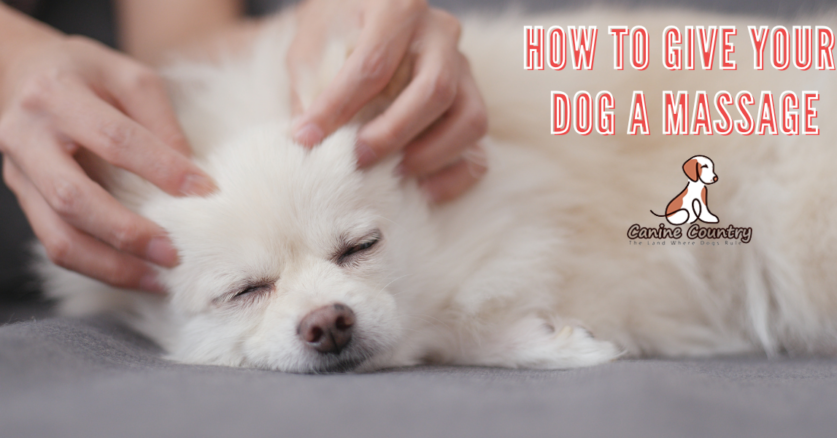
How to Give Your Dog a Massage
Posted Jun 9, 2026 in Guides
After a long day of rolling around in the grass, barking at squirrels, and practicing tricks, a pup could use a massage. Jokes aside, a good rubdown can support a canine’s physical health, emotional well-being, and your bond with them immensely. Here’s everything you need to know to give your pup the perfect dog massage.
Why Massage Your Dog?
Dogs experience many of the same benefits we do when getting massages. It can improve our pup’s health by increasing circulation, relaxing muscle tension, correcting muscle imbalances, improving posture, and increasing relaxation. Canine massage is also known to reduce cortisol, boost serotonin levels, and stimulate the release of endorphins, which can reduce a senior dog’s dependency on medication. Massaging your dog helps their health holistically and also deepens the bond between you and your furry friend!
Step-by-Step How to Massage Your Dog
Step 1: Start Slow and Gentle
Begin with long strokes along your dog’s back and sides, and always move in the direction of their fur. This technique is called effleurage, a common method in animal massage. Flatten your palm and add light-to-moderate pressure on each spot. Pay attention to how your pup responds, as it will tell you if they enjoy it or not.
Step 2: Work the Whole Body
If your dog seems to respond well to the massage, gradually expand to other areas. Use gentle circular motions on their shoulders and back. On the legs, slow circular strokes can ease tension and improve flexibility. For their chest and abdomen, light pressure with strokes will help with relaxation and circulation. Don’t forget about their ears, paws, and tail! Many dogs carry heavy emotional tension in their paws, so gentle work on the pads between the toes can be especially releasing.
Step 3: Try a Tapping Technique
Tapotement is a gentle drumming of the fingers on a part of your canine’s body to engage the nervous system. It stimulates both healthy and weakened muscles. Place your fingers on your dog’s skin and tap each one individually. Gauge their reaction to see if they find it energizing, soothing, or annoying and adjust accordingly.
Step 4: Know When to Stop and Places to Avoid
Your dog knows what they like. It is up to you to pick up on those signals. If they are moving away, tensing up, or avoiding eye contact, these are signals to pause or wrap up the massage session. As for what to avoid, rubbing an area back and forth is not the massage you may think it is. It may actually irritate them and aggravate them. Always stroke in the direction of hair growth, all the way down to the paws.
Massaging your dog is one of the most rewarding things you can do for their health and happiness. From relieving muscle tension to boosting their mood, the benefits are real, and the bonding time is priceless. With a little patience, a gentle touch, and an eye for your pup’s cues, you’ll have them melting into your hands in no time. So the next time your dog curls up beside you after a long day of adventures, take a few minutes to try some new techniques to show them some love. Their wagging tail will say it all!